PostgreSQL Patterns for Full-Stack Apps in Production
Schema design, indexing, and API patterns I use with PostgreSQL, Node.js, and Next.js for reliable production applications.
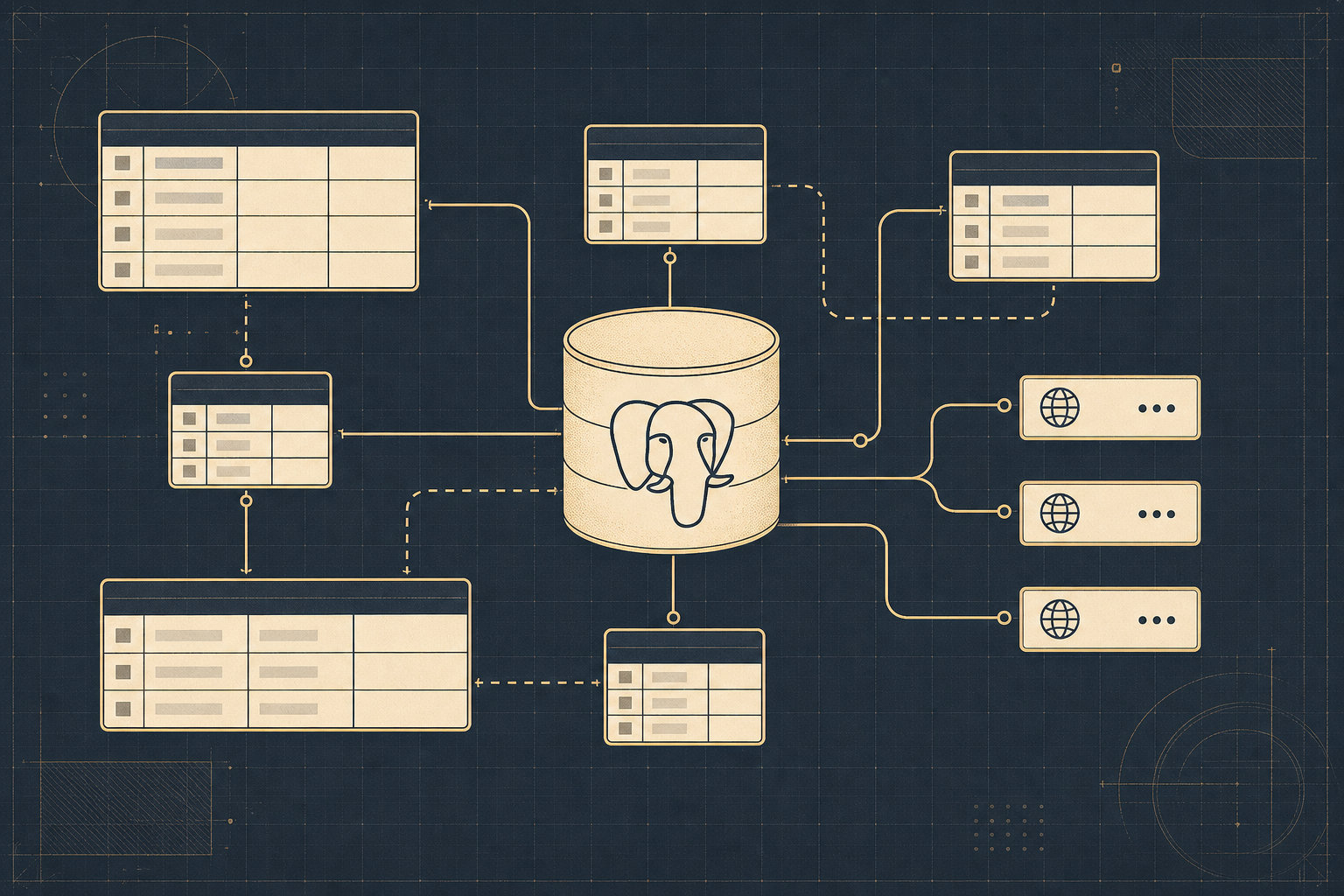
PostgreSQL is the default database on most of my projects—from a custom CRM at Nexrena to contact intake on this portfolio. It’s boring in the best way: strong consistency, mature tooling, and a query planner that rewards thoughtful indexing.
These patterns keep apps fast and operable after launch.
Schema design: optimize for queries, not diagrams
Start from access patterns:
- What lists do users paginate? Add composite indexes matching
WHERE+ORDER BY. - What must be unique? Enforce with constraints, not application checks alone.
- What is append-only? Consider separate tables for events/audit logs.
Use uuid or bigint for public IDs depending on exposure; never leak sequential internal IDs in public APIs unless intentional.
Migrations are part of the product
Treat migrations like code review items:
- Backward-compatible steps for zero-downtime deploys when possible.
- Index creation with
CONCURRENTLYon large tables in production. - Seed scripts only for dev/test—never fake production data patterns.
On Vercel + serverless Postgres, keep connection pooling in mind (PgBouncer or the provider’s pooler).
API layer patterns with Node/Express or Next.js route handlers
Thin handlers, fat services. Route files validate input and call service functions that own transactions.
// Good: one transaction per business action
await db.query('BEGIN');
try {
  await insertSubmission(data);
  await enqueueNotification(data.id);
  await db.query('COMMIT');
} catch (e) {
  await db.query('ROLLBACK');
  throw e;
}
Avoid N+1 queries in list endpoints—use joins or batched loaders (WHERE id = ANY($1)).
Indexing checklist
| Symptom | Likely fix |
|---|---|
| Slow filtered lists | Composite index on filter + sort columns |
| Slow text search | tsvector + GIN, or dedicated search (Meilisearch, etc.) |
| Lock contention | Shorter transactions; avoid SELECT FOR UPDATE without need |
| Table bloat | Autovacuum tuning; archive old rows |
Run EXPLAIN (ANALYZE, BUFFERS) on production-shaped data—not empty dev tables.
Observability
Log slow queries above a threshold. Track:
- Connection pool saturation
- Deadlocks and serialization failures
- Migration duration in CI
Alerts on error rate beats guessing from average latency alone.
When to reach for extras
- Read replicas when reporting hammers the primary.
- Materialized views for dashboards with tolerable staleness.
- Row-level security when multi-tenant isolation must live in the database.
Wrapping up
PostgreSQL rewards discipline: clear schemas, indexed access paths, and transactions that match business boundaries. That’s how full-stack apps stay fast under real load—not by swapping databases every quarter.
Explore my experience or recent projects for examples in production.