Building B2B E-Commerce with Next.js and Headless Patterns
Architecture lessons from shipping B2B storefronts—catalog UX, checkout flows, and maintainable Next.js stacks for industrial buyers.
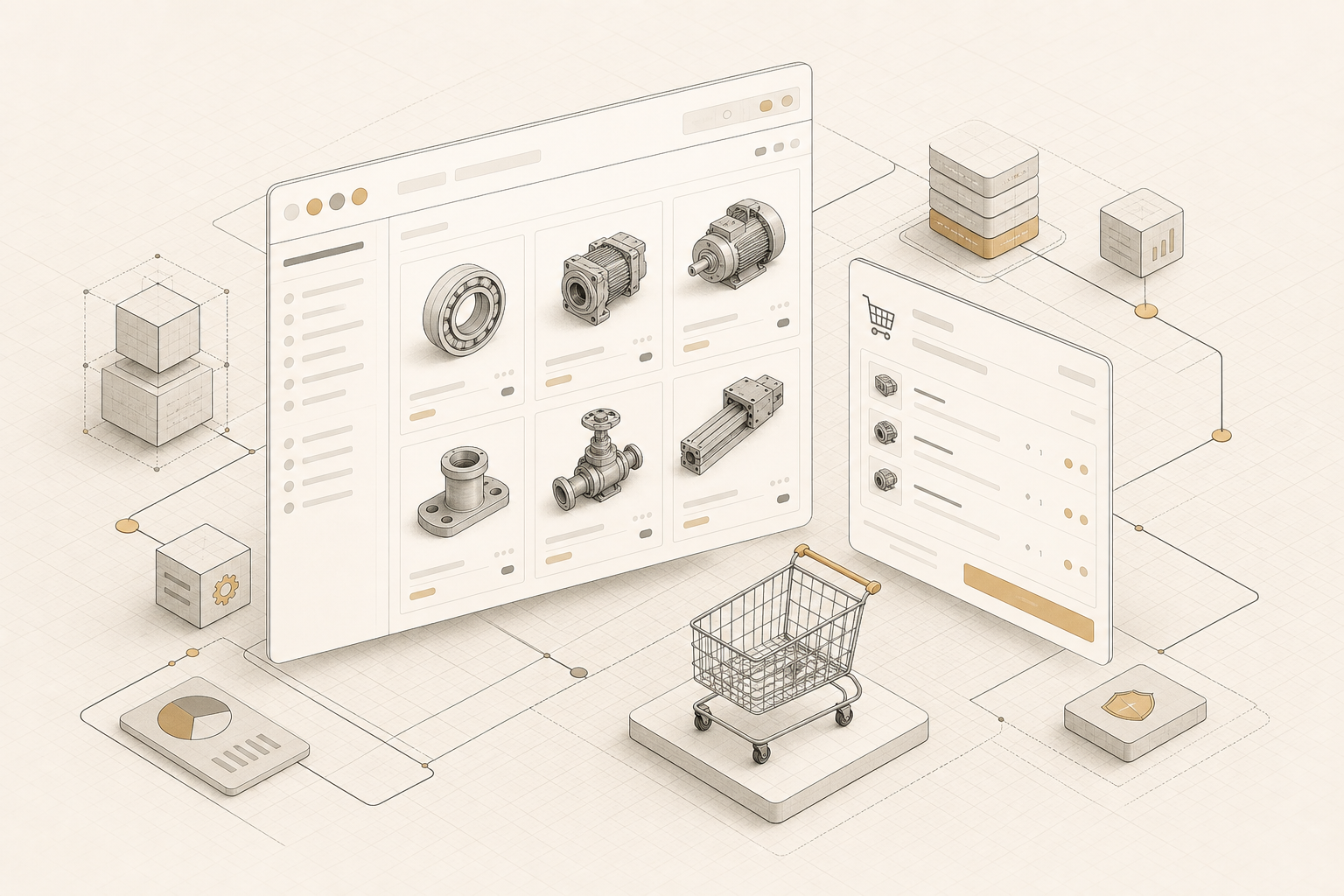
B2B e-commerce is not B2C with a login wall. Buyers often need spec sheets, bulk pricing, compatibility filters, and fast reorder flows—not lifestyle photography and one-click checkout.
I’ve shipped B2B and industrial storefronts including ForzaBuilt.com (industrial adhesives) and VITO Fryfilter (commercial kitchen equipment). The stack varies, but the architecture principles repeat.
Design for the catalog first
Industrial buyers search by SKU, application, or compliance requirement—not by browsing hero banners.
What works:
- Faceted search with clear filter state in the URL (shareable, indexable category pages).
- Product comparison and downloadable PDFs for procurement teams.
- Visible stock/lead-time signals when integrations allow it.
What slows teams down:
- Treating the homepage as the primary navigation hub.
- Hiding technical specs behind multiple clicks.
- One-size PDP templates for both commodity and configurable products.
Headless vs. monolith: pick for the team, not the trend
Shopify excels when merchandising velocity matters and the catalog fits the platform. Custom Next.js + a CMS or PIM makes sense when:
- Product data comes from ERP or distributor feeds.
- You need non-standard configurators or quote flows.
- Marketing and engineering share ownership of landing pages.
There is no universal winner—match the integration surface area to your sales motion.
Next.js patterns that survive handoff
- Colocate data fetching with routes using App Router server components where possible; keep client components for interactivity only.
- Stable URL structure for categories and products—SEO and sales both depend on it.
- Edge-friendly caching for public catalog pages; bypass cache for authenticated pricing if needed.
- Structured data (
Product,BreadcrumbList) on PDPs and category pages.
Conversion metrics that matter in B2B
Traffic alone is misleading. Track:
- Quote requests and sample orders (not just add-to-cart).
- Search refinement rate (are buyers finding products?).
- Time-to-first meaningful interaction on PDPs.
At VITO Fryfilter, Shopify optimizations contributed to 285% YoY traffic growth and a 2.8% conversion rate—but we paired that with review automation and email flows, not catalog changes alone.
Launch checklist
- Category pages have unique titles and meta descriptions
- PDPs include specs, documents, and internal links to related products
- Checkout/quote path works on mobile (buyers forward links internally)
- Analytics events map to CRM or sales workflows
- 404 and discontinued product redirects are planned
Need a second pair of eyes?
If you’re replatforming a B2B catalog or stuck between Shopify and custom Next.js, I help teams ship maintainable storefronts—not six-month wireframes. View my work or download my resume.